Master of Science in Biomedical Engineering (STEM)
at University of New Haven USA

Overview
It’s an incredibly dynamic field, with almost unlimited promise for the treatment of health conditions, and there’s no better place to enter it than in the hands-on, student-centered, and career-focused learning environment of our master’s program in biomedical engineering.
Explore all of the fascinating focus areas
The program provides you with exciting opportunities to explore multidisciplinary focus areas that address:
- Medical devices such as artificial lungs, replacement heart valves, pacemakers, dental implants, catheters, stents, and hip and knee prostheses
- Biomaterials in medicine (metals, ceramics, polymers, nanomaterials)
- Biomedical Imaging
- Biomedical Instrumentation — for example, biosensors and bioanalytics
- Tissue Engineering
With a biomedical engineering master’s degree from the University of New Haven you will be superbly prepared to take your place in the field as a competent engineer with skills set sought by the global market and as a researcher capable of independent investigation. You will also have another skill to add to your set— the ability to present results of an independent investigation cogently. In the 21st century, engineers are expected to be comfortable in communicating their ideas and findings. In fact, it has become a must for employers.
30
Application Processing Days
Under Graduate
Program Level
Fact & Figures
Full Time On Campus
Study Mode
24
Duration
University of New Haven
Location
Master of Science in Biomedical Engineering (STEM) Assistant Fee
$18000
Tuition Fee
$0
Average Cost of Living
$50
Application Fee
Master of Science in Biomedical Engineering (STEM) Admissions Requirements
- Minimum Level of Education Required: To be accepted into this program, applicants must have a Bachelor's Degree.

Get superfast admissions at top Master of Science in Biomedical Engineering (STEM) institutes in 2024
Benefits of choosing

➤Admission’s guaranteed at Top institutes across the world.
➤Enjoy exclusive application fee waiver’s with Edmissions.
➤Unlimited FREE Counselling sessions with Edmission’s
Experts
➤Get Tips from industry veterans to crack the IELTS exam in 1
week.
➤Assistance with scholarships, loans, forex, student accommodation and visa guidance.
Work Permit USA
Optional Practical Training or OPT is a period during which students, who have completed their degrees in the USA, are permitted to work for one year on a student visa by the United States Citizenship and Immigration Services (USCIS). OPT allows students to work for up to 3 years and develop real-world skills to survive in the competitive jobs market.
It is temporary employment for a period of 12-months that is directly related to the major area of study of an F-1 student. Eligible students have the option to apply for OPT employment authorization before completing their academic studies and/or after completing their academic studies.
A student can participate in three types of Optional Practical Training (OPT):
- Pre-Completion OPT: This is temporary employment provided to F-1 students before completion of their course of study.
- Post-Completion OPT: This is temporary employment available to F-1 students after completing their course of study.
- 24 Month STEM Extension: Students enrolled in STEM (Science, Technology, Engineering, and Mathematics) courses can a 24-month extension after their initial Post-Completion OPT authorization.
Detailed Program and Facts
30
Application Processing Days
Full Time On Campus
Program Intensity
Under Graduate
Program Level
24
Duration
Study Visa
Other Courses by University of New Haven,USA
Health Sciences, Nursing and Emergency Services
Bachelor of Science in Fire Science
Fighting fires requires knowledge, strategy, expert technique, calm under pressure, and courage.
As a fire science major at the University of New Haven, you will be joining one of the largest, most comprehensive fire science programs in the country. You will learn the science of what gives a fire life, what keeps it burning, and the techniques and tactics to put it out. You will learn to battle blazes, lead teams, and prevent fires from starting in the first place. And, you’ll focus your career path by choosing one of two concentrations:
- Fire Administration: Learn fire department best practices and department command structure as you develop the skills needed to become a leader.
- Fire/Arson Investigation: Prepare for a career in fire investigation, arson/fraud detection, and code enforcement as you earn a minor in criminal justice.
Our facilities are state of the art. Your practical experience in them will include:
- Becoming familiar with modern fire-detection software and alarm panels
- Studying in the state-of-the-art fire/arson investigation lab, where live fires are produced for investigation
- Experimenting with flash and fire points in the fire dynamics lab
- Learning about and experiencing the systems and sprinkler heads used throughout the industry
48 month
Duration
$ 43500
Tuition
Arts & Humanities
Bachelor of Science in Music and Sound Recording
Technology is essential to our relationship with sound. Recording studios, theaters, social media platforms, film and television production, stadiums, and game studios rely on the competencies of sound engineers in order to function. Contemporary compositions for pop stars, film scores, and orchestras are also facilitated by the expanded capabilities of the latest musical interfaces.
Our Bachelor of Arts and Bachelor of Science programs in Music and Sound Recording are based on the philosophy that musicians should have technical skills and sound recordists should know the art form they are recording. To this end, our students take courses in three interrelated areas: 1) music history, theory, and aesthetics; 2) sound recording methodology and technique; 3) musicianship.
Professional Guidance
A degree in Music and Sound Recording focuses on the craft and art of working with sound. Our professors are former and current engineers, producers, and composers with professional expertise that informs our curriculum. In combination with courses from the Tagliatela College of Engineering, students receive foundational skills in the generation and manipulation of sound and apply those skills in various ways.
We also believe that these competencies are best applied with an understanding of how music and sound function in the world. You will have opportunities to enhance your development with courses on the theory and history of music. Our instructors also serve as academic and career advisers, assisting students as they navigate four years of college and prepare for industry opportunities
48 month
Duration
$ 43500
Tuition
Engineering & Technology
Bachelor of Science in Industrial and Systems Engineering (STEM)
The world runs on systems — transportation systems, food-supply systems, communication systems, government systems, and too many more to mention. These huge systems need men and women with the special talent to ensure they run smoothly. They need "big picture" people — industrial and systems engineers.
That need is steadily increasing as the world’s resources continue to shrink and cost effectiveness becomes paramount. Right now, the demand for industrial and systems engineers is actually greater than the current labor pool.
With an outlook this exciting, you need a program that gives you every advantage in training for the real world before you graduate. The University of New Haven program does that. Collaborating with each other, our engineering faculty, future employers, students, alumni, and business and industry professionals designed and built an innovative program that teaches you to:
- Apply your knowledge of mathematics, science, and engineering in designing engineering systems
- Design and conduct experiments as well as analyze and interpret data to improve operations and systems
- Design a system, component, or process to meet desired needs within realistic constraints — in other words, the economic, environmental, social, political, ethical, health and safety, manufacturability, and sustainability factors
- Function on multidisciplinary teams and communicate effectively
- Identify, formulate, and solve engineering problems
48 month
Duration
$ 43500
Tuition
Health Sciences, Nursing and Emergency Services
Bachelor of Science in Health Sciences with Concentration in Speech-Language Pathology
The B.S. in Health Sciences combines basic scientific knowledge, healthcare industry specific knowledge, and practical skills for students to be competitive in the 21st century healthcare workforce. The program addresses both the administrative and technical aspects of healthcare as well as the professional, social, ethical, and political elements. Courses provide broad technical skills as well as the organizational competencies needed for entry level positions in a wide range of healthcare organizations and companies, as well as preparation for graduate study in clinical professions. In particular, this program aims to provide a broad, interdisciplinary training for students interested in clinical and non-clinical health fields including but not limited to medicine, population health, clinical research administration, and healthcare administration. The B.S. in Health Sciences also offers two optional concentrations: Speech-Language Pathology and Occupational Therapy. Each of these concentrations focuses on a specific healthcare profession and is designed to prepare students for graduate school in an area of specialization.
48 month
Duration
$ 43500
Tuition
Business & Management
Master of Science in Accounting with Concentration in Corporate Track
The objective of the Master of Science in Accounting program is to provide an in-depth framework for artificial intelligence (AI)/analytics, corporate, forensic, and taxation accounting inquiry, devised in structure and content from the entire scope and process of accounting-information-based economic decision-making. The existence of such a framework is intended to provide graduate accountants and professional practitioners with an opportunity to share in the development and assessment of issues of accounting interest within a decision-making context. Additionally, the Master of Science in Accounting program is designed to provide non-accountants and practitioners with the accounting credits requisite for certification.
Program Outcomes:
- Students will demonstrate familiarity with the fundamental concepts and knowledge in their concentration areas of Corporate, Forensic, Tax, or AI/Analytics.
- Students will be able to apply knowledge from 1.1 toward analysis and analyze data using technology and information systems and using appropriate quantitative and analytical techniques.
- Students will able to integrate knowledge from functional Accounting areas and formulate solutions that consider both the internal and the external environments of an organization.
- Students will be able to analyze the effects of business transactions using Accounting fundamentals.
- Students will able to demonstrate an understanding of social responsibility in accounting and its effects on stakeholders.
- Students will able to demonstrate the ability to apply a variety of ethical principles within the Accounting practice.
- Students will be able create well written documents related to Accounting topics.
- Students will recognize and explain how different Accounting sub-disciplines interrelate.
24 month
Duration
$ 17500
Tuition
Business & Management
Master of Science in Accounting with Concentration in Accounting Analytics (STEM)
The objective of the Master of Science in Accounting program is to provide an in-depth framework for corporate, accounting analytics, and taxation accounting inquiry, devised in structure and content from the entire scope and process of accounting-information-based economic decision-making. The existence of such a framework is intended to provide graduate accountants and professional practitioners with an opportunity to share in the development and assessment of issues of accounting interest within a decision-making context. Additionally, the Master of Science in Accounting program is designed to provide non-accountants and practitioners with the accounting credits requisite for certification.
The accounting analytics concentration provides the tools for data analysis used in auditing, predictive modeling, and business operations analytics. These tools will enhance the traditional skillsets provided in the Master of Science in Accounting core. This is a cutting-edge field in the modern American marketplace.
24 month
Duration
$ 17500
Tuition
Engineering & Technology
Bachelor of Science in Electrical Engineering with Concentration in Cybersecurity (STEM)
Electrical engineering is concerned with the analysis, design, development, and operation of electrical and electronic systems. Examples of these systems include communication, fiber optics, data processing, power generation, and distribution, control, and instrumentation. Digital circuits and computers are important and integral parts of such systems and are widely used by electrical engineers in their design and development. The electrical engineer is also concerned with the devices that make up systems such as transistors, integrated circuits, rotating machines, antennas, lasers, and computer-memory devices.
Recognizing the changing trend in engineering education, the Electrical Engineering program has adopted a multidisciplinary approach for teaching and learning by incorporating a series of newly developed project-oriented courses based on the spiral curriculum.
The early part of the program emphasizes electrical engineering skills that form the background for the upper-level elective and design courses. Physics, chemistry, mathematics, computer programming, basic engineering science, and general education courses supplement the required and elective electrical engineering courses.
The upper-level electrical engineering course work provides areas of concentration for in-depth study. Students can choose additional technical electives from outside the area of concentration to provide more breadth of knowledge.
To influence our society’s evolution, the electrical engineer must acquire an understanding of our society, our cultural heritage, and the human condition. The engineer must communicate ideas to other engineers and to the public. The Electrical Engineering program enables this via liberal and humanistic studies. The University Core Curriculum requirements allow students to expand their cultural and intellectual horizons by exposing them to the humanities and social sciences. Students learn written and oral communication skills in the core courses as well as in multidisciplinary engineering-science courses in the freshman and sophomore years. Students apply these skills in the humanities and social science courses as well as in laboratory/design courses in their major.
48 month
Duration
$ 43500
Tuition
Natural Sciences & Mathematics
Bachelor of Science in Biochemistry
Biochemistry is where chemical processes merge with biological functions and systems. It’s the fascinating area of study where scientists focus on the biochemical reactions that happen at the molecular level in living things.
Biochemical research is an integral part of many fields, and discoveries in biochemistry have improved — and continue to improve — the quality of our lives. From contributions to the field of medicine — including in cell biology, pharmacology, immunology, nutrition, cancer research, and forensic medicine — to its applications in industry and food production, biochemistry is demonstrating an ever-widening range of impact, opening up exciting new opportunities for future biochemists.
Our Program Gives You All the Elements for Success
To prepare you for this highly collaborative field, the University of New Haven’s B.S. in Biochemistry program integrates courses in biology and chemistry to give you a holistic view of how chemical interactions influence biological systems. The knowledge you gain in the classroom will be put to work in hands-on laboratory courses, where you will develop your proficiency in conducting scientific experiments using our high-tech instrumentation to analyze and evaluate experimental results.
In addition:
- You will have the unique opportunity to perform mentored research with faculty from both the Biology and Chemistry programs, adding depth to your research experience, which will impress future employers.
- Because biochemists — like everyone else— must possess the soft skill of effective communication, you will develop the ability to critically assess and effectively communicate your knowledge of biology, chemistry, and experimental results both orally and in writing.
- You will develop proficiency in the use and critical evaluation of scientific literature and biological and/or chemical databases.
48 month
Duration
$ 43500
Tuition
Engineering & Technology
Bachelor of Science in Computer Engineering, Concentration in Cybersecurity (STEM)
Students must complete a total of 126 credits to earn the bachelor of science degree in computer engineering. Humanities or social science electives must be selected to fulfill the University Core Curriculum requirements, and students must complete the internship requirement.
Technical electives are 3000-level or higher CSCI or ELEC courses that fit into the student’s plan of study and are approved by the academic adviser. One technical elective may be taken outside the specified areas with the approval of the academic adviser. In the final year of study the student takes a two-semester senior design sequence, CMPE 4497 and CMPE 4498. In the first semester the student selects a topic, completes a literature search, and commences the design process. In the second semester, the student completes the design, implements the project, and presents the results.
The following list shows the sequence of courses that a student should follow to complete the program in four years.
48 month
Duration
$ 43500
Tuition
Business & Management
Bachelor of Science in International Business in Economics with Concentration in Behavioral Economics
The International Business - Economics degree is designed to provide in-depth expertise in the discipline of economics while it concurrently provides students with a broader, global business perspective. Such perspective is essential to operating in today’s increasing complex multi-national business context. The program ensures students have a proficiency in a second language, enhanced socio-cultural awareness and a robust study abroad experience. Today’s business climate is marked by fluid and interconnected financial markets, widely available technological advancements that increase global connectivity, increased international trade, and the emergence of vibrant growing economies in what were formerly considered third world countries. Increased globalization has necessitated that managers have a broad, holistic perspective that incorporates the diverse components of an international business degree. Such a degree will become increasingly valuable as the trends associated with 21st century commerce progress.
Students earning a B.S. degree in international business - economics are required to complete 121 credits, including the university core curriculum (41 credits) and the business program core (30 credits). Further clarification and additional requirements are outlined below:
48 month
Duration
$ 43500
Tuition
View All Courses by University of New Haven, USA
Top Study Abroad Exams
Popular Universities to Study Abroad
- University of Waterloo
Waterloo
- University Canada West
Vancouver
- University of Windsor
Windsor
- Cape Breton University
Sydney
- Dalhusie University
Halifax
- Carleton University
Ottawa
- University of Ottawa
Ottawa
- University of Guelph
Guelph
- Explore more colleges in Canada
- University of New Haven
West Haven
- Kent State University
Kent
- Wright State University
Dayon
- San Jose State University
West Haven
- Clark University
Worcester
- Rowan University
Glassboro
- Golden Gate University
San Francisco
- Arkansas
San Francisco
- Explore more colleges in USA
- Coventry University
Coventry
- University of Birminghame
Birminghame
- De Montfort University
Leicester
- Cardiff University
Cardiff
- BPP University
London
- University of West London
London
- University of Nottingham
Nottingham
- University of Warwick
Coventry
- Explore more colleges in UK
- Auckland Institute Of Studies
Auckland
- Massey University - Auckland Campus
Albany
- Eastern Institute of Technology - Auckland Campus
Auckland
- NorthTec - Auckland Campus
Auckland
- Massey University - Manawatu Campus
Palmerston North
- University of West London
London
- Wellington Institute of Technology (WelTec) - Petone Campus
Lower Hutt
- Otago Polytechnic - Dunedin Campus
Dunedin
- Explore more colleges in New Zealand
- Chandigarh University
Mohali
- Parul University
Vadodara
- Sharda University
Greater Noida
- Jain University
Bangalore
- Bennett University
Greater Noida
- Lovely Professional University
Phagwara
- Chitkara University
Rajpura
- Brainware University
Kolkata
- Explore more colleges in India
- Abu Dhabi University
Abu Dhabi
- Gulf Medical University
Ajman
- New York University
Abu Dhabi
- Emirates Aviation University
Dubai
- Higher Colleges of Technology
Dubai
- British University in Dubai
Dubai
- Al Ghurair University
Dubai
- American University in the Emirates
Dubai
- Rochester Institute Of Technology Dubai
Dubai
- Emirates Academy of Hospitality Management
Dubai
- American University of Ras Al Khaimah
Ras Al Khaimah
- Explore more colleges in UAE
- Ras Al Khaimah Medical and Health Sciences University
Ras Al Khaimah
Explore Colleges and Courses in USA
- Arts & Humanities in usa
- Business & Management in usa
- Natural Sciences & Mathematics in usa
- Engineering & Technology in usa
- Computer Science & IT in usa
- Health Sciences, Nursing and Emergency Services in usa
- Social Sciences in usa
- Creative Arts & Design in usa
- Hospitality, Tourism, Wellness Leisure & Sports in usa
- Environmental Studies & Earth Sciences in usa
Latest Blog Posts


USA
2024-01-12 06:43:40
1423 Views
Top 10 universities in USA 2024 by Times Higher Education (THE) World University Rankings

USA
2023-11-28 06:19:01
2353 Views
What Is The Average Salary Of U.S. Doctors In 2024?

USA
2023-10-07 07:51:57
1939 Views
OFC Appointment for US Visa: A Detailed Guide
Trending Blog Posts


Tips and tricks
2022-08-19 04:34:00
457321 Views
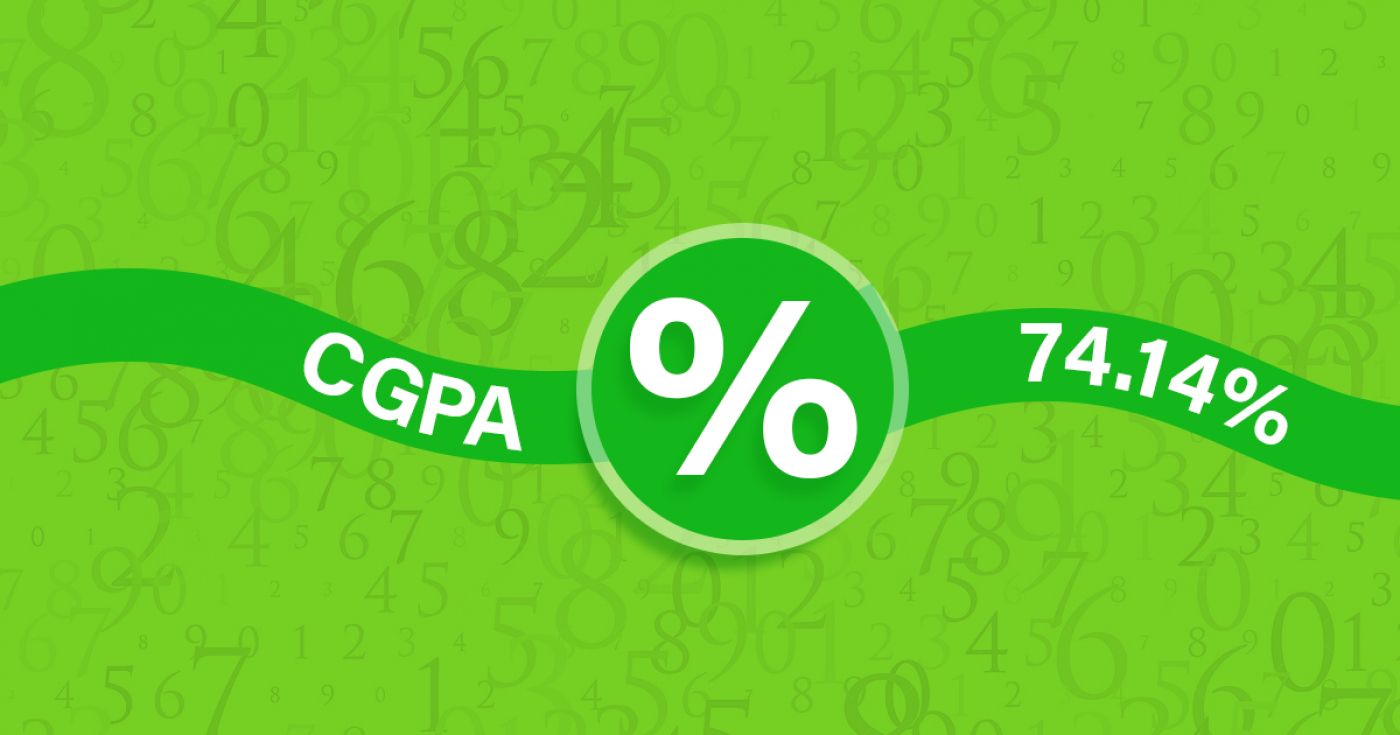
CGPA Calculator - How to Convert CGPA to Percentage?

USA
2022-07-29 05:32:00
143593 Views
Spring Intake in USA 2024: Deadline & Universities

Exam
2023-01-03 11:30:18
195130 Views
IELTS Speaking Cue Cards Topics & Samples with Answers 2024

Search, Shortlist, Apply and get accepted! It’s that Simple to pursue your dream to Study abroad with Edmissions. Our team of experts provide you the right guidance that helps you to take admission in your dream college in countries like Canada, the USA, the UK
© 2021-2024 Edmissions - All rights reserved.


TALK TO OUR EXPERTS