Master of Science in Integrative Studies - Marketing Communications
at Southern Illinois University Edwardsville USA

Overview
The fast change of pace in our society is creating new career opportunities for individuals trained in multiple disciplines. The Master of Science in integrative studies allows students to access expertise from two or three areas and integrate courses into a degree that meets the needs of an emerging career field.
Consider integrative studies if:
- You have diverse interests that span two or three academic disciplines and you want to blend these interests into one cohesive program
- You have a career interest in an emerging field that crosses academic disciplines, such as cultural heritage and resources management or marketing communications
- You want to advance in a non-traditional sector or start your own business
What can I do with a degree in Integrative Studies?
A Master of Science in integrative studies can lead to a multitude of career paths as well as entry into doctoral programs. The degree will meet the needs of students seeking knowledge for advancement in a specific industry, looking to move to an emerging field that is multidisciplinary or starting their own business. Employment outlook and salary information for these careers vary widely. A carefully designed plan of study will provide students with a unique combination of skills and knowledge that will be advantageous in the job market.
Marketing Communications
The messages and the media that businesses deploy to communicate with their target market can make or break their marketing efforts. In designing schemes for marketing products, a primary objective is to create and sustain demand and preference for the product. With the proliferation of traditional, as well as social media platforms, it is important for a company to strategically choose communication tools that will position the product or the company in the minds of the target customer.
30
Application Processing Days
Under Graduate
Program Level
Fact & Figures
Full Time On Campus
Study Mode
24
Duration
Southern Illinois University Edwardsville
Location
Master of Science in Integrative Studies - Marketing Communications Assistant Fee
$15291
Tuition Fee
$0
Average Cost of Living
$40
Application Fee
Master of Science in Integrative Studies - Marketing Communications Admissions Requirements
- Minimum Level of Education Required: To be accepted into this program, applicants must have a Bachelor's Degree.

Get superfast admissions at top Master of Science in Integrative Studies - Marketing Communications institutes in 2024
Benefits of choosing

➤Admission’s guaranteed at Top institutes across the world.
➤Enjoy exclusive application fee waiver’s with Edmissions.
➤Unlimited FREE Counselling sessions with Edmission’s
Experts
➤Get Tips from industry veterans to crack the IELTS exam in 1
week.
➤Assistance with scholarships, loans, forex, student accommodation and visa guidance.
Work Permit USA
Optional Practical Training or OPT is a period during which students, who have completed their degrees in the USA, are permitted to work for one year on a student visa by the United States Citizenship and Immigration Services (USCIS). OPT allows students to work for up to 3 years and develop real-world skills to survive in the competitive jobs market.
It is temporary employment for a period of 12-months that is directly related to the major area of study of an F-1 student. Eligible students have the option to apply for OPT employment authorization before completing their academic studies and/or after completing their academic studies.
A student can participate in three types of Optional Practical Training (OPT):
- Pre-Completion OPT: This is temporary employment provided to F-1 students before completion of their course of study.
- Post-Completion OPT: This is temporary employment available to F-1 students after completing their course of study.
- 24 Month STEM Extension: Students enrolled in STEM (Science, Technology, Engineering, and Mathematics) courses can a 24-month extension after their initial Post-Completion OPT authorization.
Detailed Program and Facts
30
Application Processing Days
Full Time On Campus
Program Intensity
Under Graduate
Program Level
24
Duration
Study Visa
Other Courses by Southern Illinois University Edwardsville,USA
Arts & Humanities
Bachelor of Science in Foreign Languages and Literature
At SIUE, we take our students out into the world and bring the world to our students. Our program curriculum includes subject areas focusing on the languages, literatures, cultures and histories of diverse regions and countries. Our K-12 teacher certification program is accredited by the Council for the Accreditation of Educator Preparation and the American Council on the Teaching of Foreign Languages (CAEP/ACTFL).
Language learners are brought together in a variety of settings including classroom, language lab, study abroad destinations, language conversation hours and student organizations. While offering opportunities to study many different languages from around the world, we provide a balance between delivering courses to students majoring in foreign languages and literature, and contributing to general education course requirements. Study abroad opportunities are offered in countries all around the world.
In addition to our concentration areas in French, German and Spanish, language courses are offered in Arabic, Chinese, Greek, Italian, Latin and Yoruba. Interdisciplinary minors are available in African studies, Asian studies, classical studies, European studies and Latin American studies.
What can I do with a degree in Foreign Languages and Literature?
Increasing diversity in the United States requires more professionals have diverse language skills and cultural awareness. Students graduating with knowledge of one or more foreign languages will have a competitive edge in today’s high level of globalization in the world economy. Some recent graduates from the Department of Foreign Languages and Literature hold positions with companies such as Alloy Holdings, Boeing, Express Scripts, Deloitte Tohmatsu, Anheuser-Busch, the AIDS Foundation and Wells Fargo.
48 month
Duration
$ 18246
Tuition
The study of history begins with questions about the past; how things came to be as they are or were. These questions can contribute to a greater understanding of ourselves, others and the world in which we live.
Historians approach the study of the past from various perspectives, but all analyze the patterns and causes of change in human thought and action across space and time and the consequences of those changes. Some, working within or across national histories, focus on the trajectory of particular social institutions, such as the family, government, business or religion. Alternately, historians can investigate the historical development of ideologies or of cultural concepts such as race or gender. Historians borrow investigative strategies freely from other disciplines. For some historians, the methodologies of the social sciences become critical tools for the study of the past, while others prefer a historical approach involving the methods of the humanities and literature. Most adopt some mixture of methodologies.
In the College of Arts and Sciences at SIUE, the Department of History emphasizes the study of primary sources beginning with our freshman-level survey labs, through the senior research projects. We also provide numerous opportunities for hands-on learning through class projects and internships at many venues in the greater St. Louis region and in the Metro East. A specialization in applied historical methods is also available for those interested in museums, editing and digital technology. The social science secondary education minor for licensure in teaching is housed in the Department of History.
What can I do with a degree in History?
Traditionally, a bachelor’s degree in history was thought to primarily provide a knowledge base for two careers: licensure in teaching, or as a foundation for attending law school. While teaching and attending law school are still viable options for students with a degree in history, the degree is becoming broadly recognized as a foundation for many other careers. Students are pursuing careers in local, state and federal government, including the Foreign Service and city or town management; nonprofit organizations; politics, including political advising; curatorial and archival management in libraries, museums and art galleries; media, public relations, digital editing and film consulting; and business, in corporate training and development.
48 month
Duration
$ 18246
Tuition
Environmental Studies & Earth Sciences
Master of Science in Environmental Sciences (STEM)
The mission of the environmental sciences graduate program is to cultivate students’ perspectives of environmental issues and provide students with refined knowledge of environmental issues at the local, regional and global scale. The program will increase the student’s technical competence in addressing and analyzing these issues, their origins, ramifications and resolutions. The environmental sciences graduate program at SIUE is designed to enhance and promote professional education and career opportunities in a wide area of interests.
What can I do with a degree in Environmental Sciences?
Students completing the graduate program in environmental sciences have career opportunities with governmental agencies, private industries, consulting firms and educational institutions. Areas of responsibility may include environmental field or laboratory research and analysis, environmental policy and law, environmental remediation, solid and hazardous waste management, groundwater pollution control, water management, air quality management, environmental and ecological risk assessments, and restoration environmental engineering.
24 month
Duration
$ 15291
Tuition
Education & Training
Bachelor of Science in Early Childhood Education
The early childhood education program in the Department of Teaching and Learning leads to initial teacher licensure in Illinois to work with children birth through second grade, as well as a non-licensure option to work in infant/toddler and preschool settings that do not require teacher licensure. The program addresses national standards set by the Council for the Accreditation of Educator Preparation and the National Association for the Education of Young Children, as well as state standards set by the Illinois State Board of Education. The department offers quality programs that connect learned theory to practical experiences in schools while keeping classes small and providing personal attention.
What can I do with a degree in Early Childhood Education?
According to the U.S. Bureau of Labor Statistics, the education field is expected to grow 12% through 2022, and teacher education programs at SIUE have an exceptional record of preparing highly effective early childhood, elementary, middle level, special education and secondary education teachers. Our graduates also pursue careers as parent educators, child development specialists, child service agency workers, child and family advocates, juvenile justice officers, and hospital play group directors, just to name a few.
48 month
Duration
$ 18246
Tuition
Natural Sciences & Mathematics
Bachelor of Arts in Biological Sciences, Specialization in Ecology, Evolution and Conservation (STEM)
The biological sciences encompass the study of all life on Earth. Biological sciences programs are offered through the Department of Biological Sciences in the College of Arts and Sciences. At SIUE, our diverse programs of study include specializations that allow students the opportunity to pursue any areas that are of interest to them. Students can customize their academic program in order to better prepare them for their chosen career.
What can I do with a degree in Biological Sciences?
Many careers are available for people with basic or advanced training in biology. There are opportunities in botany, ecology, education, fisheries, forensics, forestry, genetic engineering, horticulture, medical technology, microbiology, molecular biology, parasitology, physiology, wildlife management and zoology. Technical and supervisory positions are available in federal, state, industrial and university laboratories. Environment and health-related occupations almost always require sound, basic training in biology. Most students entering schools of medicine, dentistry, optometry, osteopathy, veterinary science, chiropractic and podiatry are biology majors. Basic training in biology is essential for careers in allied health sciences, including nutrition, pharmacy, occupational therapy and physical therapy.
Ecology, Evolution and Conservation
The bachelor's in biological sciences with a specialization in ecology, evolution and conservation at SIUE prepares students for positions that require the application of ecological principles to the solution of environmental problems. The specialization also prepares students for advanced study in all areas of biology, including wildlife ecology and forestry. Students selecting this specialization will take a planned sequence of courses that includes basic biological sciences, ecology, evolution, and environmental science. This study may include laboratory and field research. A variety of elective courses are available to allow students to pursue special interests such as plant or animal ecology, environmental management, and evolutionary biology, at either the organismal or cellular level. Students should consult their advisor to devise a course schedule to fit their specific talents and interests.
48 month
Duration
$ 18246
Tuition
Business & Management
Master of Business Administration, Specialization in Management
The Master of Business Administration (MBA), accredited by the Association to Advance Collegiate Schools of Business (AACSB) International, is designed to develop the professional capabilities of managers working in business. The central objective of the curriculum in the School of Business is to enhance quality and innovation in the analysis, interpretation, and use of information for formulating, communicating and implementing managerial decisions in business organizations. The ethical management of resources in a global environment is emphasized through the curriculum. Required courses in quantitative analysis, and decision making will sharpen the ability of students to apply models and skills, and integrate knowledge across disciplinary areas. Students can select a specialization in business analytics, healthcare administration, management information systems, project management, or a general specialization comprised of four elective courses that will fit their specific career objectives.
What can I do with an MBA?
Students completing the program should be prepared to engage in managerial careers leading to advancement through middle-and upper-level positions in business and nonprofit organizations. Additionally, graduates of the program are qualified for careers in administration or management of business firms; in banking and insurance; and in federal, state and local government agencies, as well as a variety of other settings where knowledge of business functions is required.
Management
The management specialization prepares students for the increasing responsibilities of managerial roles in organizations, and for positions requiring skilled interpersonal interactions. Students can choose from human resources, operations and emerging markets management courses.
24 month
Duration
$ 15291
Tuition
Environmental Studies & Earth Sciences
Bachelor of Arts in Environmental Sciences (STEM)
The environmental sciences undergraduate program, in the College of Arts and Sciences at SIUE, is interdisciplinary, and is designed to cultivate students' perspectives of environmental issues, and to provide them with refined knowledge of environmental issues on a local, regional and global scale. The curriculum within the Department of Environmental Sciences will increase students’ technical competence in addressing these environmental issues, their origins, ramifications and resolutions. The program will promote experiential learning and professional education to prepare students for career opportunities in a wide variety of workplaces.
What can I do with a degree in Environmental Sciences?
According to the U.S. Department of Labor, employment of environmental scientists and specialists is projected to grow 8% through 2028, which is faster than the average for all occupations in the U.S. Graduates with a Bachelor of Science or Bachelor of Arts with specializations in environmental health, environmental toxicology and environmental management will have career opportunities in their areas of interest. For example, a licensed environmental health practitioner can be employed for inspection, sampling and reporting for sanitary, food safety, sewage and waste disposal, drinking water, pest control, or industrial hygiene.
48 month
Duration
$ 18246
Tuition
Arts & Humanities
Master of Arts in Applied Communication Studies with Emphasis in Health Communication
The Department of Applied Communication Studies, housed in the College of Arts and Sciences, offers a program leading to the master of arts in applied communication studies, with specializations available in corporate and organizational communication, health communication, interpersonal communication, or public relations.
The graduate program in applied communication studies provides students with a broad curriculum, designed to deepen their understanding of communication theory and their ability to analyze, generate and apply communication research, as well as to enhance their knowledge and skills necessary for their development as leaders across an array of communication professions.
What can I do with a degree in Applied Communication Studies?
Graduates with a master's degree in applied communication studies are qualified for careers in business, industry, nonprofit and governmental settings, as well as in higher education (at the community college level). Mastery of communication theory, research methods and application strategies is particularly relevant for students seeking careers in fields such as management, training and development, sales, advertising, public relations, community relations, intra- and inter-organizational communication, consulting, fundraising, event organizing, community health relations, communication training in health organizations, and human resources.
24 month
Duration
$ 15291
Tuition
Natural Sciences & Mathematics
Bachelor of Arts in Mathematical Studies, Specializations in Actuarial Science (STEM)
How does a statistician design an experiment to test a new drug? What is an efficient algorithm to solve a differential equation, and when does it work? How do you determine a fair price for an annuity? Given a complex network of nodes and edges, what is the shortest path from one vertex to another? How can you teach problem solving in a diverse high school classroom?
These are only some of the questions to be explored in our five undergraduate study options in the Department of Mathematics and Statistics. In the College of Arts and Sciences at SIUE, we have a faculty-to-undergraduate major student ratio of five to one, so our students receive personalized attention from faculty recognized for outstanding teaching and excellent research.
What can I do with a degree in Math?
Professionals holding positions in the mathematics field as mathematicians, statisticians, and actuaries consistently rank their careers at the top of surveys on job satisfaction and security. According to The Bureau of Labor Statistics, the job outlook in these fields remains strong, and growth is projected at 25% over the next 10 years.
Actuarial Science
What are the odds that an earthquake will cause catastrophic damage in a particular area? How should an insurance company determine how much to charge for life insurance? Actuarial science is a focused discipline that uses mathematical and statistical models to assess the financial, economic and business implications of future events.
According to the Society of Actuaries, an actuary combines the skills of a business executive, mathematician, and financial and investment manager. Actuarial science is an ideal concentration for students interested in careers that deal with studying risks related to economics, finance and social issues.
48 month
Duration
$ 18246
Tuition
Natural Sciences & Mathematics
Master of Science in Biological Sciences (STEM)
The department and outdoor venues on our beautiful campus, situated on 2,660 acres, provide excellent opportunities for innovative biological study. The College of Arts and Sciences' outdoor classroom consists of a 75-acre lake, a 35-acre botanical garden and 380 acres of forest and restored grasslands set aside as a nature preserve. The Department of Biological Sciences is located in Science Building West, a modern, science education facility with fully equipped teaching and research labs. The department is also equipped with state-of-the-art technology in microscopy, physiology, histology, cell biology, microbiology, genetics and toxicology research, and includes extensive botanical and zoological teaching collections. Opportunities for plant and animal research are available in our greenhouse and vivarium facilities.
What can I do with a degree in Biological Sciences?
Numerous career and advanced training opportunities are available to persons holding a master’s degree in biology. These include doctoral training in biology and in the health sciences; secondary and junior college teaching; environmental assessment; and employment in educational, industrial, and governmental laboratories and agencies.
24 month
Duration
$ 15291
Tuition
View All Courses by Southern Illinois University Edwardsville, USA
Top Study Abroad Exams
Popular Universities to Study Abroad
- University of Waterloo
Waterloo
- University Canada West
Vancouver
- University of Windsor
Windsor
- Cape Breton University
Sydney
- Dalhusie University
Halifax
- Carleton University
Ottawa
- University of Ottawa
Ottawa
- University of Guelph
Guelph
- Explore more colleges in Canada
- University of New Haven
West Haven
- Kent State University
Kent
- Wright State University
Dayon
- San Jose State University
West Haven
- Clark University
Worcester
- Rowan University
Glassboro
- Golden Gate University
San Francisco
- Arkansas
San Francisco
- Explore more colleges in USA
- Coventry University
Coventry
- University of Birminghame
Birminghame
- De Montfort University
Leicester
- Cardiff University
Cardiff
- BPP University
London
- University of West London
London
- University of Nottingham
Nottingham
- University of Warwick
Coventry
- Explore more colleges in UK
- Auckland Institute Of Studies
Auckland
- Massey University - Auckland Campus
Albany
- Eastern Institute of Technology - Auckland Campus
Auckland
- NorthTec - Auckland Campus
Auckland
- Massey University - Manawatu Campus
Palmerston North
- University of West London
London
- Wellington Institute of Technology (WelTec) - Petone Campus
Lower Hutt
- Otago Polytechnic - Dunedin Campus
Dunedin
- Explore more colleges in New Zealand
- Chandigarh University
Mohali
- Parul University
Vadodara
- Sharda University
Greater Noida
- Jain University
Bangalore
- Bennett University
Greater Noida
- Lovely Professional University
Phagwara
- Chitkara University
Rajpura
- Brainware University
Kolkata
- Explore more colleges in India
- Abu Dhabi University
Abu Dhabi
- Gulf Medical University
Ajman
- New York University
Abu Dhabi
- Emirates Aviation University
Dubai
- Higher Colleges of Technology
Dubai
- British University in Dubai
Dubai
- Al Ghurair University
Dubai
- American University in the Emirates
Dubai
- Rochester Institute Of Technology Dubai
Dubai
- Emirates Academy of Hospitality Management
Dubai
- American University of Ras Al Khaimah
Ras Al Khaimah
- Explore more colleges in UAE
- Ras Al Khaimah Medical and Health Sciences University
Ras Al Khaimah
Explore Colleges and Courses in USA
- Arts & Humanities in usa
- Business & Management in usa
- Natural Sciences & Mathematics in usa
- Engineering & Technology in usa
- Computer Science & IT in usa
- Health Sciences, Nursing and Emergency Services in usa
- Social Sciences in usa
- Creative Arts & Design in usa
- Hospitality, Tourism, Wellness Leisure & Sports in usa
- Environmental Studies & Earth Sciences in usa
Latest Blog Posts


USA
2024-01-12 06:43:40
1416 Views
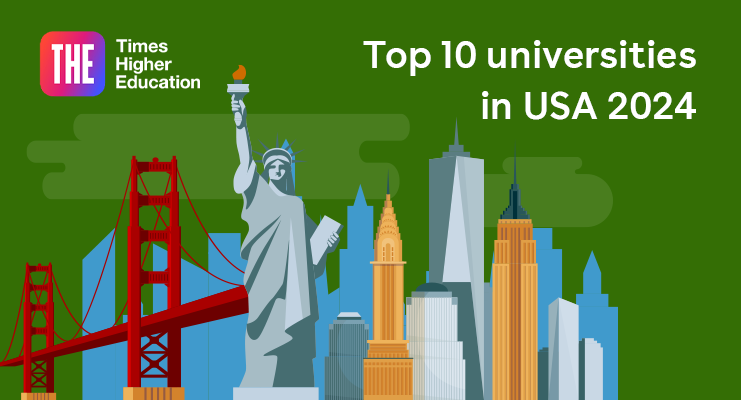
Top 10 universities in USA 2024 by Times Higher Education (THE) World University Rankings

USA
2023-11-28 06:19:01
2351 Views
What Is The Average Salary Of U.S. Doctors In 2024?

USA
2023-10-07 07:51:57
1937 Views
OFC Appointment for US Visa: A Detailed Guide
Trending Blog Posts



Tips and tricks
2022-08-19 04:34:00
457300 Views
CGPA Calculator - How to Convert CGPA to Percentage?

USA
2022-07-29 05:32:00
143582 Views
Spring Intake in USA 2024: Deadline & Universities

Exam
2023-01-03 11:30:18
195117 Views
IELTS Speaking Cue Cards Topics & Samples with Answers 2024

Search, Shortlist, Apply and get accepted! It’s that Simple to pursue your dream to Study abroad with Edmissions. Our team of experts provide you the right guidance that helps you to take admission in your dream college in countries like Canada, the USA, the UK
© 2021-2024 Edmissions - All rights reserved.


TALK TO OUR EXPERTS